

Kerala’s Mobile Sanitation Engine
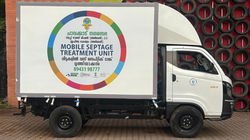
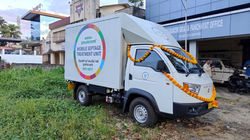
Kerala’s Mobile Sanitation Engine, developed by Bhouma Envirotech, is a state-of-the-art Mobile Septage Treatment Unit designed to bring rapid, decentralized sanitation to every corner of the state. Engineered for Kerala’s unique terrain and household septic tank patterns, this compact yet powerful system treats septage on-site, ensuring safe, compliant, and eco-friendly disposal without burdening treatment plants or waterbodies. With advanced filtration, sludge dewatering, and odor-control technology, Bhouma’s unit delivers clean effluent within minutes transforming urban sanitation, reducing public health risks, and supporting municipalities in achieving 100% scientific septage management across Kerala.
 |  |  |  |
|---|---|---|---|
 |  |  |  |
 |  |  |  |


Major MTU Advantages

Mobile as treatment system is mounted on wheels

Low operational cost and efficient performance

Keep environment clean by stopping septage dumping

Cuts cost by avoiding transport of 95–99% liquid septage

MTU high flow treats more tanks per day

How MTU Treats Wastewater from a Properly Constructed Septic Tank
The Mobile Treatment Unit (MTU) operates on a robust solid–liquid separation and on-site treatment principle designed to handle septage directly at the point of generation. When desludging a properly constructed septic tank, the MTU performs a series of treatment steps that ensure both environmental safety and operational efficiency.
Solid–Liquid Separation: The incoming septage is first subjected to mechanical separation, where heavier solids and grit are isolated from the liquid fraction. This prevents blockages and facilitates efficient downstream processing.
Sludge Thickening: The separated sludge undergoes a thickening process to significantly reduce its moisture content. This process minimizes the sludge volume, making it easier and safer to handle, transport, or co-treat at a designated facility.
Effluent Treatment: The clarified liquid portion passes through an integrated treatment system - typically involving physical, biological, and/or chemical stages - to remove suspended solids, organic matter, and pathogens. The treated effluent thus meets safe discharge norms.
Safe Disposal or Reuse: The treated effluent can be safely disposed of on-site, as per regulatory guidelines, or reused for non-potable applications such as gardening, landscaping, or dust suppression.
Operational Capacity: Each MTU has a treatment capacity ranging from 3,000 to 6,000 litres per hour, enabling rapid, decentralized treatment of septage without the need for large-scale stationary infrastructure.
Sustainable Development Goal (SDG) Impact
Access to improved sanitation promotes health amd wellbeing byreducing communicable diseases
Wastewater will be treated and can discharged to environment safely

The model aids increased economic growth and will ensure decent work environment.
Will bring improved sanitation accessible and affordable to all thereby improving their access to clean water.

Project is capable to combat climate change and its impacts.

Project will help to prevent and significantly reduce marine pollution though wastewater discharges to sea.

Project will have significant actions to reduce the degradation of natural habitats, halt the loss of biodiversity etc.
Frequently asked questions
- 01
- 02
- 03
- 04
- 05
Tested & Evaluated by National & International Associations


